
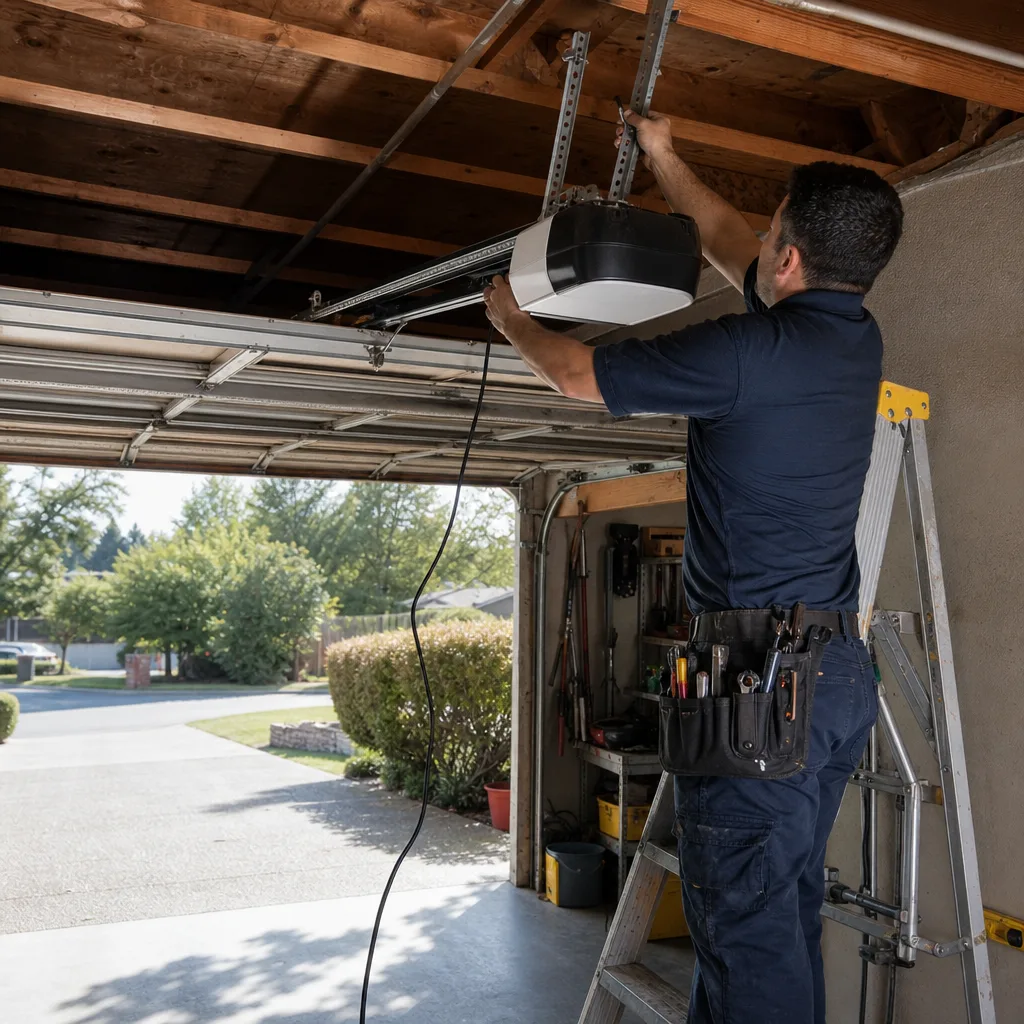
Last updated November 23, 2026
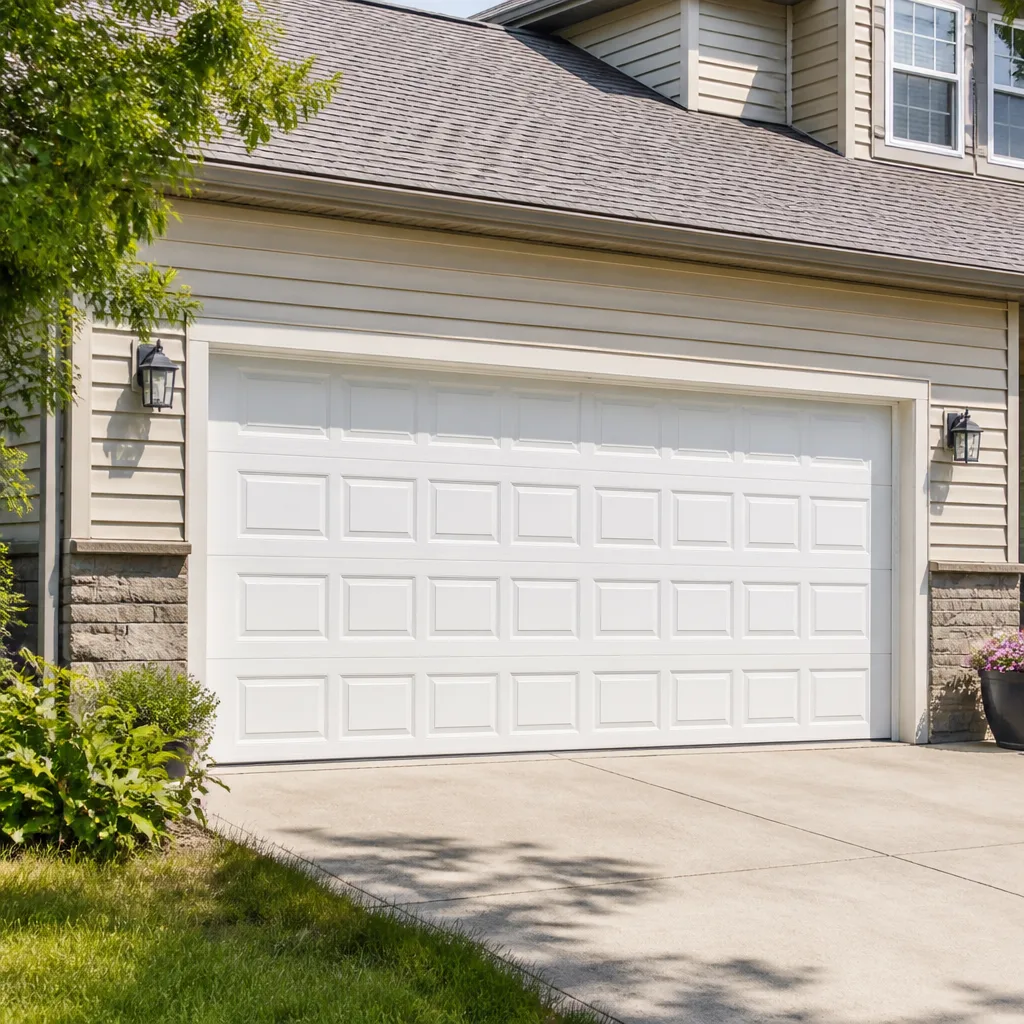 Raised-panel steel
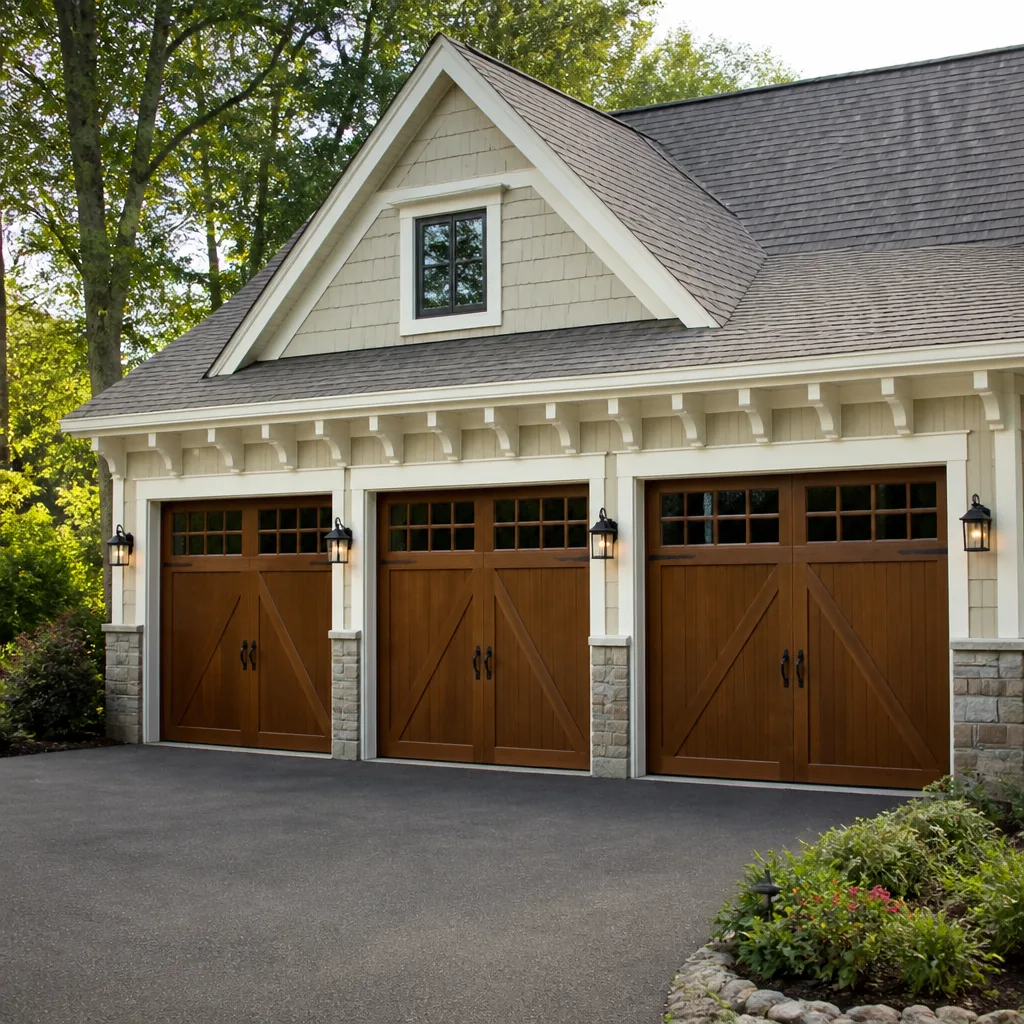 Carriage house
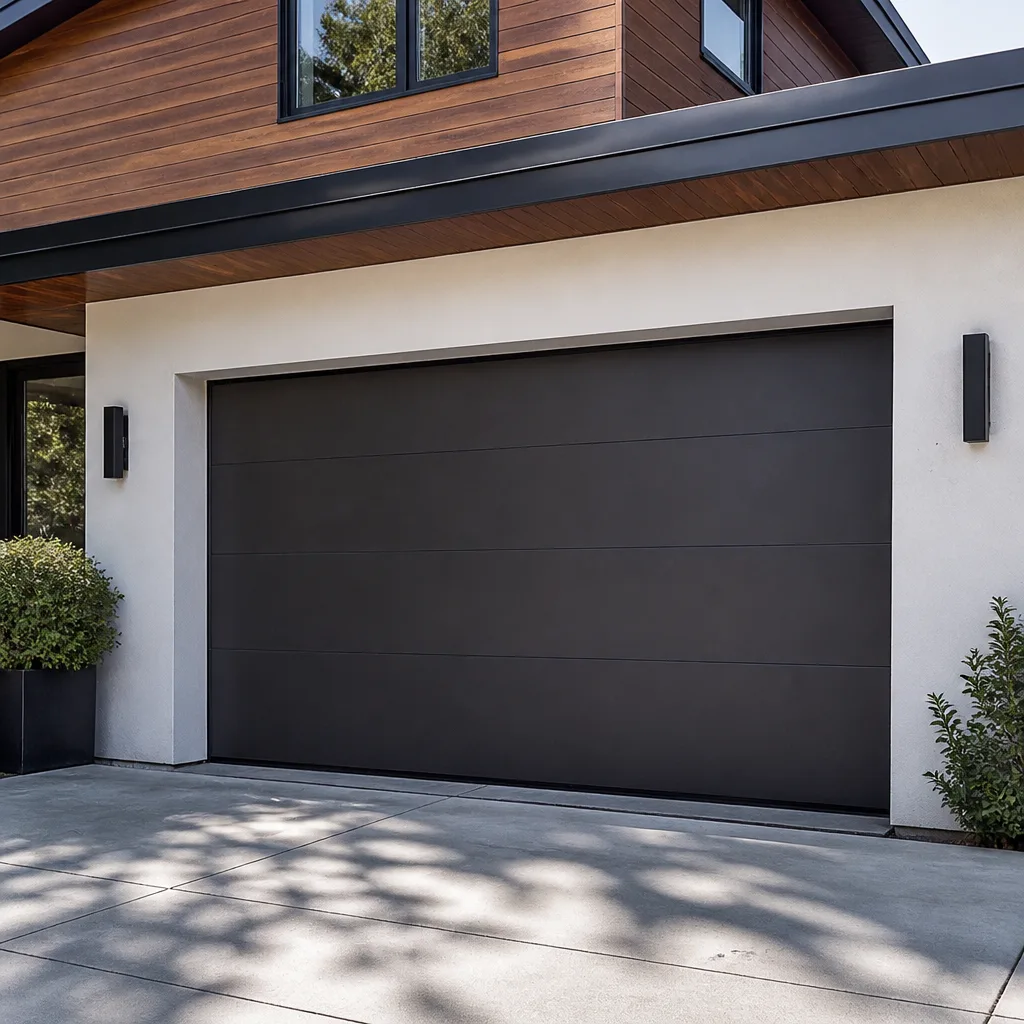 Modern flush
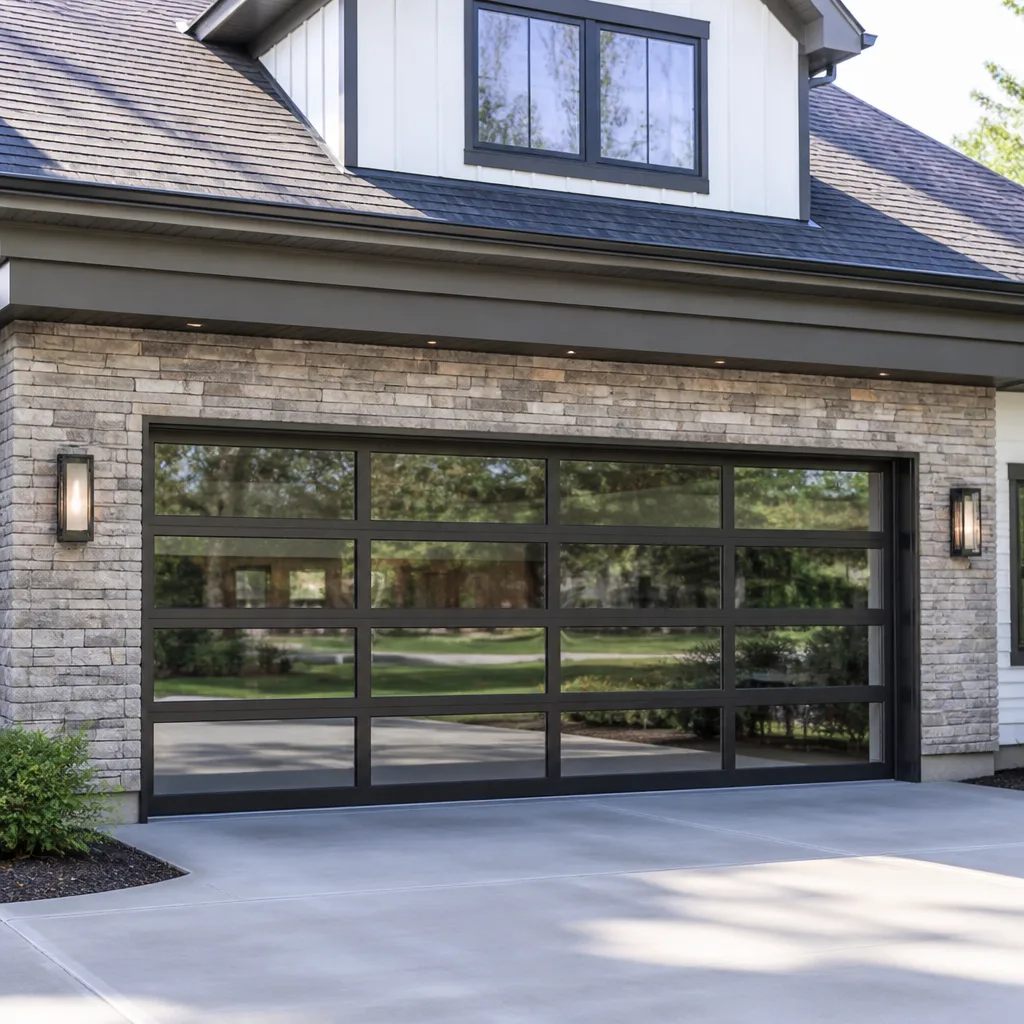 Full-view glass
 LiftMaster openers
 Chamberlain openers
Full 25-point door and opener safety check with every visit - springs, cables, rollers, tracks, and your LiftMaster or Chamberlain opener included
You get a price before we start. It does not change when the pro arrives.
Get your free estimateGarage Door Repair Maintenance Checklist for Federal Way Homeowners
A torsion spring on a typical residential door holds 150 to 200 lbs of stored tension. Of the ten items that show up on most garage door maintenance checklists, three involve components that can injure an untrained person badly enough to require a hospital visit: the springs, the cables, and the opener’s force and limit settings. That’s not a reason to skip maintenance. It’s a reason to draw a hard line between what you should handle on a quiet Sunday in Federal Way and what belongs to a technician with the right winding bars and training.
This guide works as a triage tool. We separate owner-safe tasks from technician-only tasks, explain what each check actually tells you, and cover the seasonal timing that matters for Federal Way’s wet, mild climate. You’ll finish with a sustainable routine and a clear sense of when to stop and call.
Quick Answer
Aim to do owner-safe maintenance monthly: lubricate hinges, rollers, and the torsion bar; wipe down photoelectric sensors; run a balance test by hand; and visually inspect the door without touching springs or cables. Book a professional inspection once a year and any time the door drifts, jerks, or makes a new sound. In Federal Way, plan a deeper check in November after the wet season starts and another in early March, because damp Pacific Northwest air changes how rollers, hinges, and wood framing behave.
Styles & brands we work with
- Raised-panel steel
- Carriage house
- Modern flush
- Full-view glass
- LiftMaster openers
- Chamberlain openers
Table of Contents
- How this checklist splits: owner-safe vs. technician-only
- The owner-safe checklist: 8 tasks you can do yourself
- How to run a balance test (and read the results)
- The technician-only checklist: 4 tasks to leave alone
- Federal Way seasonal timing: November and March checks
- Lubricants that hold up in Federal Way’s wet climate
- Documenting condition so failures get caught early
- What garage door maintenance and repair cost in Federal Way
How this checklist splits: owner-safe vs. technician-only
Most maintenance advice treats every item the same. That’s the flaw. A homeowner can pull a lubricant can out of the garage and spend ten minutes on hinges without risk. The same person reaching for a winding bar on a torsion spring is one slip away from a crushed hand or worse. The training to safely counter-torque a spring takes real time to build, and the consequences of getting it wrong don’t give you a second try.
So the checklist splits into three tiers:
- Tier 1 (Owner-safe): Lubrication, sensor wiping, weatherstripping inspection, hardware tightening, visual inspection, balance test, safety-reverse test, listening for new noises.
- Tier 2 (Owner-safe with caution): Panel washing, track debris removal, opener battery replacement, remote reprogramming. These require ladders and patience but no specialty tools.
- Tier 3 (Technician-only): Spring adjustment or replacement, cable inspection and replacement, opener force and limit switch tuning, and full track realignment after a strike or a bend.
The line between Tier 1 and Tier 3 is what most checklists refuse to draw. We draw it clearly because we’ve handled the aftermath when a homeowner tried to save an hour and ended up hurt. Garage doors are all we do, so we see the pattern plainly. If you want the full picture of the repair work these checks relate to, our garage door repair page lays out what a technician actually does on a service call.
The owner-safe checklist: 8 tasks you can do yourself
These tasks are safe when the door is closed, the opener is unplugged, and you keep your hands clear of the spring and cable zones. Budget about 30 minutes once a month. Pop the opener’s manual release only when you’re doing a balance test, and always re-engage it before running the motor again.
- Unplug the opener. This is the step people skip. Do it before you touch anything on the door.
- Lubricate hinges and rollers. One small shot per hinge pivot, and a light coat on each roller stem. Wipe off excess so grit doesn’t stick.
- Lubricate the torsion bar bearings. Two or three drops on each bearing plate. A PTFE-based or clean synthetic lubricant works; avoid old grease that holds dirt. (Full lubricant rundown below.)
- Test the photoelectric sensors. Wave a hand in front of them while the door closes. The door should reverse. Wipe the sensor lenses with a dry cloth; a dirty lens is the most common “my door keeps reversing” complaint in Federal Way.
- Check weatherstripping. Look along the bottom seal and side stops for cracks, flattening, or gaps at the corners. Replace when the seal flattens out or water starts getting in.
- Tighten visible hardware. Use a socket wrench to snug up hinge and bracket bolts. Don’t crush the metal; snug is the goal.
- Do a visual inspection. With a flashlight, look at spring coils (not touching – just looking) for gaps, rust streaks, or a stretched-out look. Glance at cables for frays. You’re looking, not adjusting.
- Check the balance and safety reverse. Balance test below. Then place a roll of paper towels on the floor under the door and close it; the door should reverse on contact. If it doesn’t, unplug the opener and call a technician.
Wipe down the door panels quarterly, but use only soapy water on Clopay and Amarr steel doors with factory finishes – solvents dull the paint.
How to run a balance test (and read the results)
A passing balance test looks like this: door closed, opener released (manual release pulled), then lift the door to waist height by hand and let go. A well-balanced door stays put with maybe a hand’s worth of drift. It should not fall, and it should not sprint upward. If it drifts down fast or drops, the spring tension is low. If it pulls hard upward, tension is high. Neither is something you correct by hand.
Do the test when the door is dry and the temperature is outdoors-ambient, not after a warm car has been idling in the garage. A door that feels slightly stiff in January can feel normal again by April, and that’s a climate signal, not a failure.
Interpreting what you see:
- Door drops or slams down: spring tension is too low. Don’t add coils yourself. Call for a technician to check the spring.
- Door coils upward: too much tension, or a spring on its way out. Do not manually release it further – the tension is already high.
- Door hangs to one side: usually a cable or track issue, not spring balance. Both are technician territory.
- Door feels loose or wobbly: check hinge bolts first. If tightening does not fix it, stop and call.
If you’re not comfortable pulling the release, skip the test entirely. A technician can run it safely during an inspection. For a deeper explanation of how springs age and fail, our garage door spring repair page covers the tension mechanics without giving DIY steps.
The technician-only checklist: 4 tasks to leave alone
These four items show up on nearly every generic checklist with casual “adjust if needed” instructions. That’s the part we want to correct. Each of these involves force that can hurt you, or a system that can fail dangerously if set wrong.
1. Spring adjustment and replacement
Torsion springs hold serious tension. A single spring carries enough stored energy to snap out of position and break a hand. Extension springs carry the same energy and can whip if a safety cable fails. Both need winding bars, a trained hand, and the ability to counter-torque safely. Do not attempt to test tension by loosening or tightening springs by hand. We’ve seen what happens when homeowners try: it is not worth the risk, not even to save a visit.
2. Cable inspection and replacement
Cables run at high tension alongside the springs. A frayed cable is a warning sign, not a fix-it-yourself signal. If you see one frayed strand, keep your hands off and call. A snapping cable can swing out with the same force a spring carries.
3. Opener force and limit switch tuning
The opener’s force and limit settings control how hard the door pushes and where it stops. Set too high, the door can crush an object or person before the safety reverse engages. Set too low, the door reverses on its own. Getting this right needs a technician who can measure the force against the door’s weight. On LiftMaster, Chamberlain, Genie, and Craftsman openers, the procedure is different for each brand – which is why we train on all of them. See our garage door opener repair page for what a technician checks during a tune-up.
4. Track realignment after damage
If a car bumped the track or the door came off and bent a section, do not try to bend the track back by hand. Metal fatigues, and a track that looks straight can still bind the rollers or drop the door. Track realignment is a technician task with specific tolerances.
Federal Way seasonal timing: November and March checks
Federal Way is mild and wet through fall and winter. No salt air, no coastal corrosion, no guaranteed snowpack. But the humidity and the temperature swings do affect how garage door hardware behaves compared to drier climates, and that’s why the timing of your checks matters.
There are two key windows:
- November: the wet season is settling in. Do your first deep owner-safe check of the season. Look at the bottom seal for water infiltration, check for condensation on hinges and the torsion bar, and confirm sensors are dry and clean. Cold, damp air is when opener rails get sluggish and rollers want more lubricant than in summer.
- March: the wet season tapers. Do a second check. Look for rust spots that bloomed over winter (especially on steel panel door edges near the weatherstripping and on older hardware), and confirm the balance test still passes after the cold stretch.
Between those two months, run the Tier 1 monthly tasks. The full technical inspection – springs, cables, opener tuning, full track – is once a year, ideally tucked into one of those two windows. That cadence lines up with how the local climate affects residential doors, and it catches problems before the summer, when everything dries out and small rust spots are easy to ignore until they’ve spread.
Single-trade work means we see the same patterns across Federal Way homes, whether in Twin Lakes, Lakota, or Mirror Lake. Doors facing an exposed western wall tend to catch more wind-driven rain and show more seal wear. Doors under a covered carport tend to hold up better on the finish. Both matter when you’re deciding what to check and when.
Lubricants that hold up in Federal Way’s wet climate
Regular garage door grease actually works against you here. Heavy grease holds grit and moisture, and in a wet Federal Way winter that turns into a sticky paste that attracts dirt to the hinges and rollers. You want a lubricant that stays where you put it, sheds water, and doesn’t turn into a gummed-up mess by February.
What works well in our experience:
- PTFE-based lubricant or white lithium spray: goes on light, resists moisture, penetrates hinge pivots and roller stems without attracting grit. Good for hinges and roller stems.
- Silicone spray: best for plastic components – sensor housings, opener track surfaces on some brands, and plastic idler assemblies. Does not degrade plastic and does not attract dirt.
- Clean synthetic oil in a dropper: for the torsion bar bearings and the rollers if the manufacturer specifies it. Two or three drops is all a bearing needs.
What to avoid:
- Heavy chassis grease or wheel-bearing grease: attracts dirt, thickens in cold, and picks up grit in a wet climate.
- WD-40 as a long-term lubricant: it’s a fine penetrating oil and water displacer, but it evaporates and isn’t meant as a lasting lubricant for hinges and rollers.
- Anything with a solvent base on Clopay or Amarr factory finishes: it dulls paint and can leave streaks.
- Oil on the plastic parts inside the opener housing: that’s not a lubrication point, and oil can attract dust into the moving parts.
Give lifts one light coat, not a soak. Too much lubricant is its own problem: excess drips onto the door panels and holds grit that grinds the rollers down over a season.
Documenting condition so failures get caught early
Maintenance isn’t only about the check you do today; it’s about the pattern that a check can reveal over months. A spring that’s been slowly losing tension for a year is easy to spot if you have the balance test results written down. A spring that fails without warning is what you get when there’s no record to compare against.
A simple documentation routine:
- Keep a single note in a place you’ll find it. A page in the garage, a note app, a folder on the phone. One page, not a spreadsheet.
- Record each monthly check with a date and a result. Note the balance test outcome (drifted up, drifted down, stayed put), any new noise, and any visual change on springs, cables, hinges, or seals.
- Photograph the door once a month from the same spot. Use the same angle and lighting. Compare over time; a rust spot or a seal crack that looked innocent in June is easier to spot against a June baseline than against memory.
- Log any repair or replacement – even a single hinge or roller swap. A technician diagnosing a future problem will want to know what changed and when.
- Bring the record to your annual inspection. A technician can see trends a one-time inspection cannot: spring tension slowly trending down, weatherstripping flattening at one corner faster than the others, opener force creeping up over months.
That record also helps the technician catch trend-based failures before they become emergencies. A spring that has been losing tension for six months is a scheduled replacement. The same spring failing suddenly on a cold morning is a call the homeowner didn’t plan for. The record turns the first scenario into the routine one.
What garage door maintenance and repair cost in Federal Way
Typical Federal Way area garage door work falls into familiar ranges. These are estimates, not quotes; the number that matters is the written estimate you get after a technician looks at the door. The price is quoted and agreed before any work starts, and it doesn’t change once the job is underway.
| Service | Typical estimated range (per job, not including parts) |
|---|---|
| Professional inspection and tune-up | Free estimate; the tune-up is priced per job |
| Torsion spring replacement (one spring) | $180 – $340 for a single spring |
| Matched pair of torsion springs | About twice the single-spring range – springs are almost always replaced together |
| Opener repair (diagnostic and fix) | Priced per job by written estimate |
| Panel or door repair | Priced per job by written estimate |
| New door installation | Measured, ordered, and scheduled – written estimate after measure |
Maintenance itself isn’t a paid recurring visit you have to buy. The owner-safe checks run free at home, and the annual inspection gets absorbed into a repair or tune-up you already planned. What you spend money on is the technician work: the springs, the cables, the opener tuning, the panel repairs, and the spring replacements that come up eventually in any door’s life.
Installation and new-door work is scheduled, not same-day. It’s measured, ordered, and priced by a written estimate after the measure. There’s no urgency discount and no rush charge. Same-day applies to repair calls, which is what you’d expect.
Common Mistakes to Avoid
- Greasing the tracks. Level track surfaces are meant to run dry; lubricant on the level track collects grit and drags the rollers. Lubricate the rollers themselves, not the tracks.
- Reaching for a spring with a hand tool. Torsion springs, extension springs, and cables are technician territory. No homeowner maintenance routine gives you a reason to touch one. If a spring looks stressed, stop and call.
- Skipping the November check. Federal Way’s wet season is exactly the window where seals leak, rollers stiffen, and condensation gets into hinges. The November check is a small chore that avoids a bigger one in February.
- Using heavy grease on hinges. It seems like the durable choice; in a wet climate it turns into an abrasive paste and wears parts faster. Stick with PTFE, white lithium, or light synthetic.
- Running the door with the balance test release still pulled. Re-engage the manual release before you plug the opener back in. A door that slams down on a running opener can damage the operator and shear hinges.
- Ignoring a new sound. A new pop, scrape, or grind is a signal. Log it, and if it continues after a lubrication pass, get it checked before something fails.
- Tuning the opener force by feel. The force and limit settings on a LiftMaster, Chamberlain, Genie, Craftsman, Wayne Dalton, Raynor, Clopay, or Amarr opener are calibration points, not preference settings. Turning them up to “make it close” defeats the safety reverse and is exactly what a technician will restore.
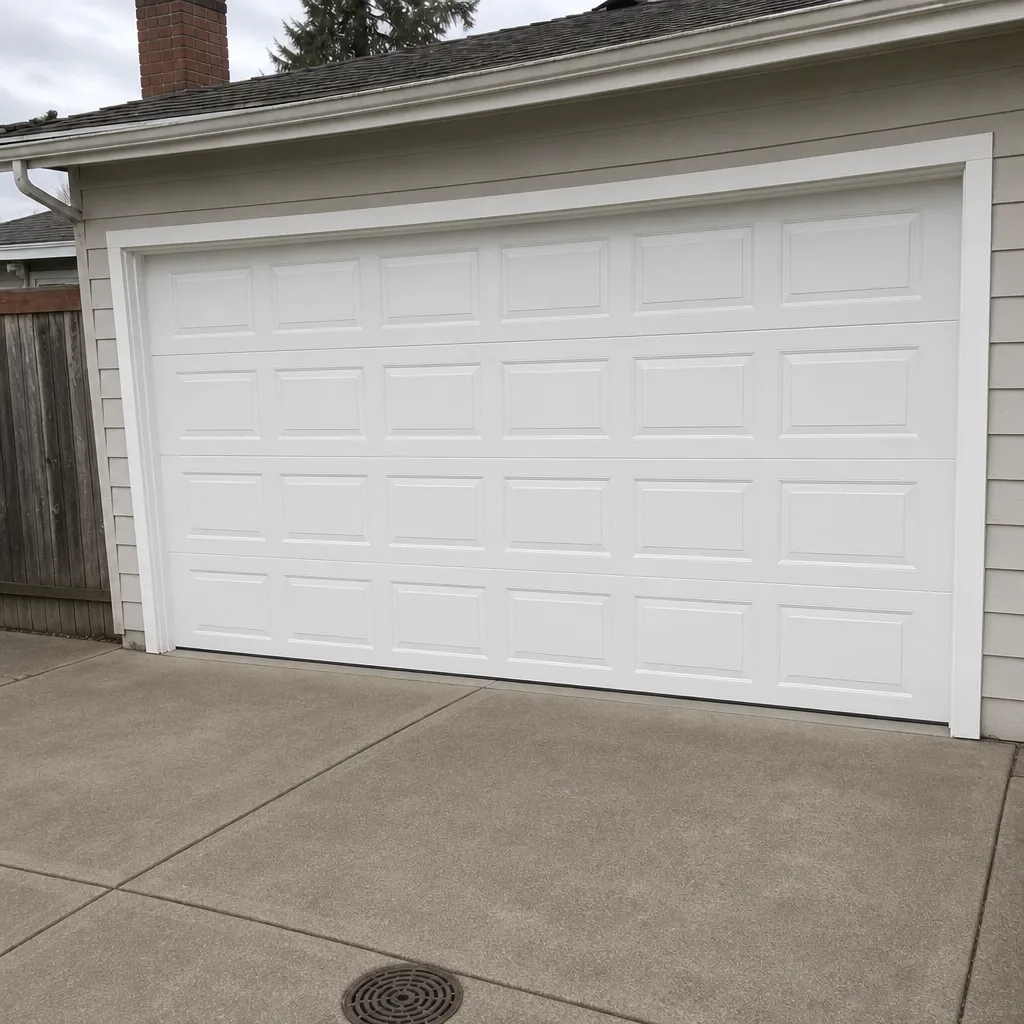
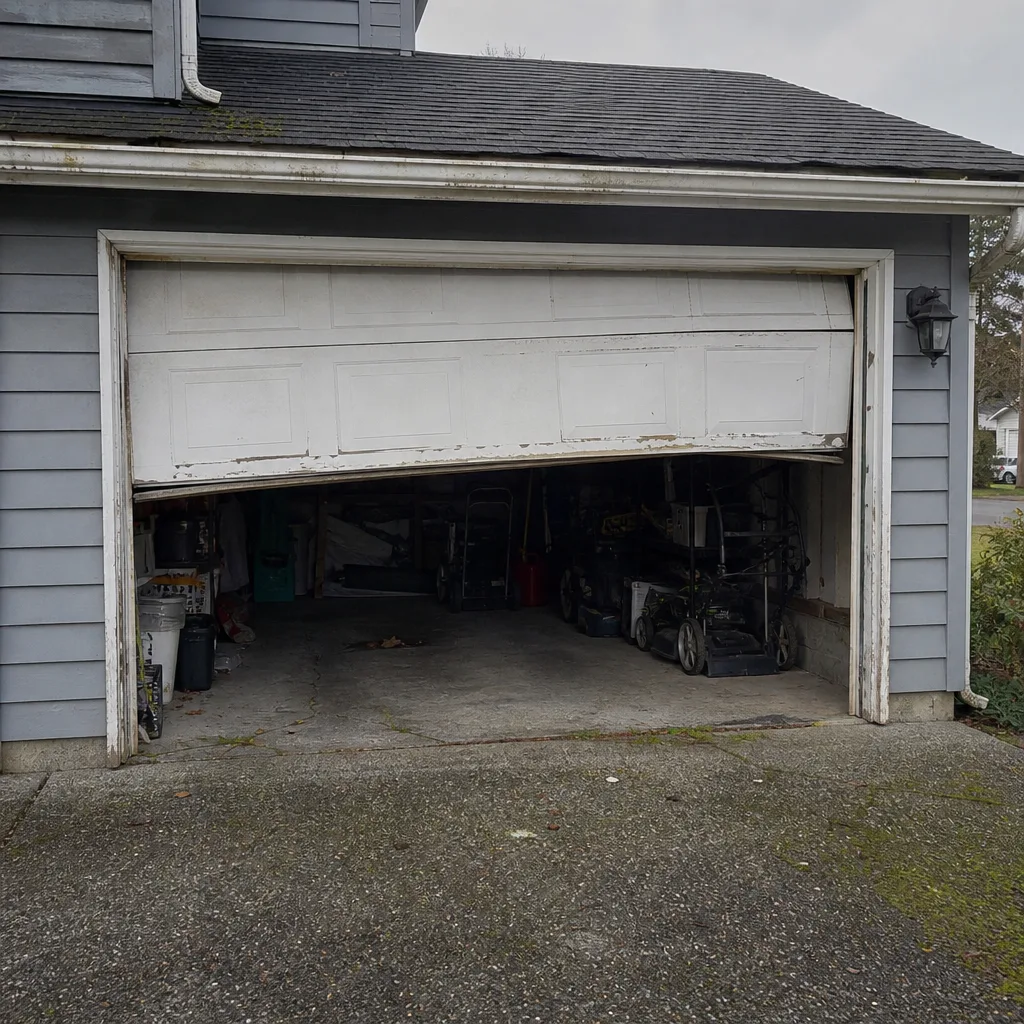
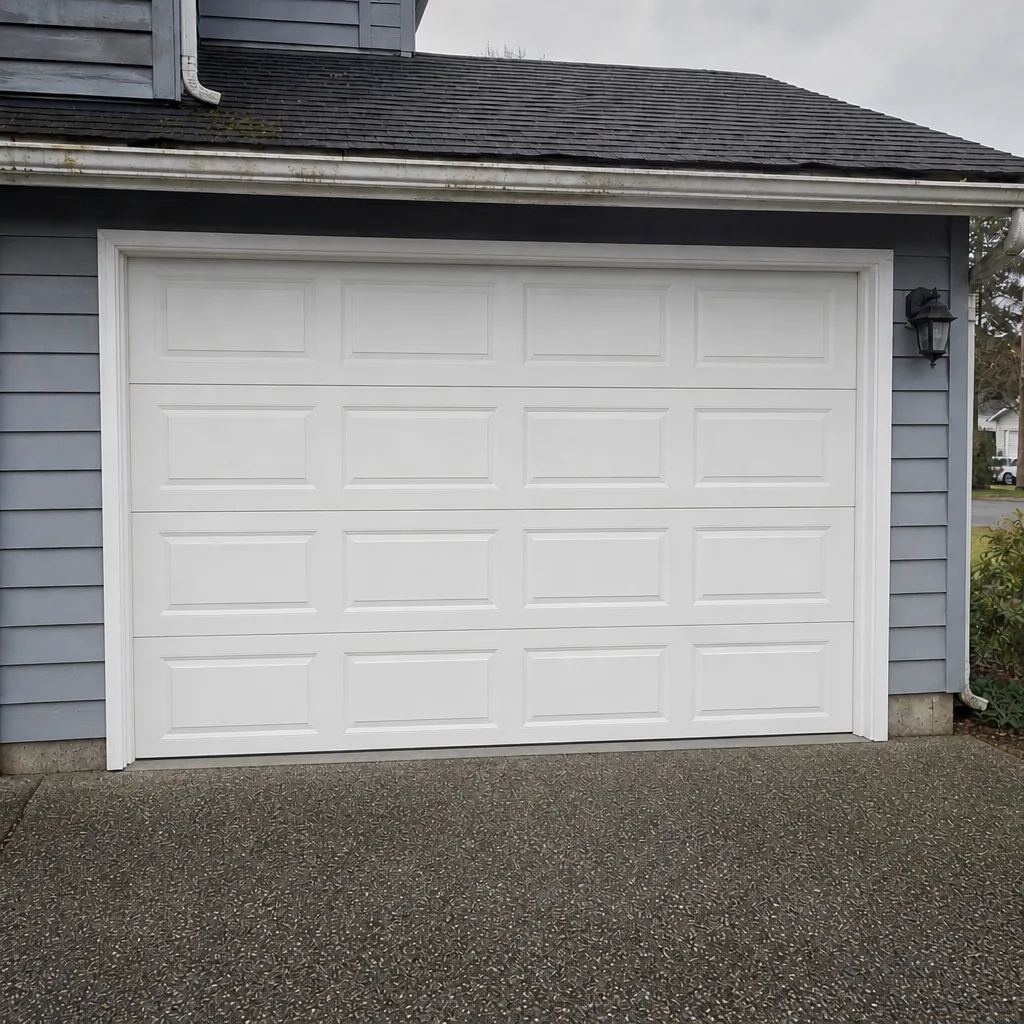
See the difference
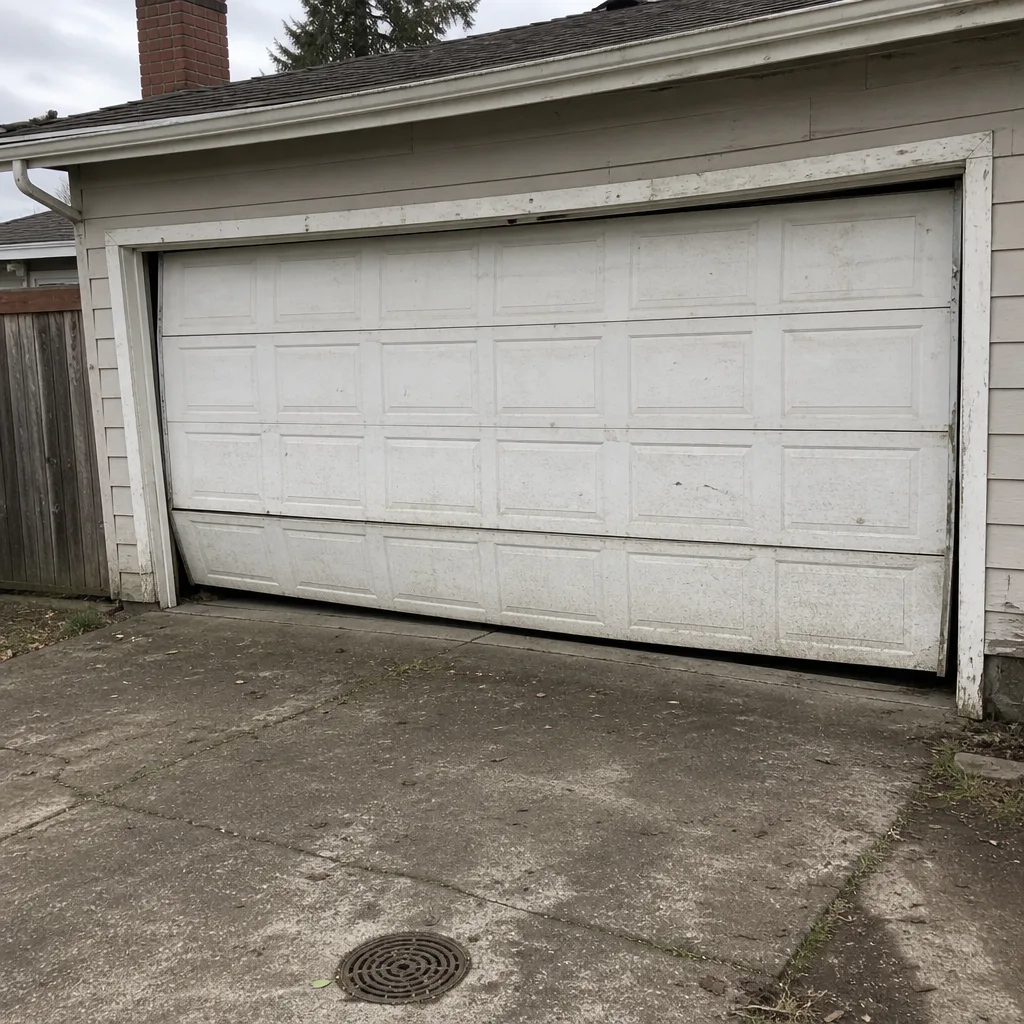 Before
 After
 Before
 After
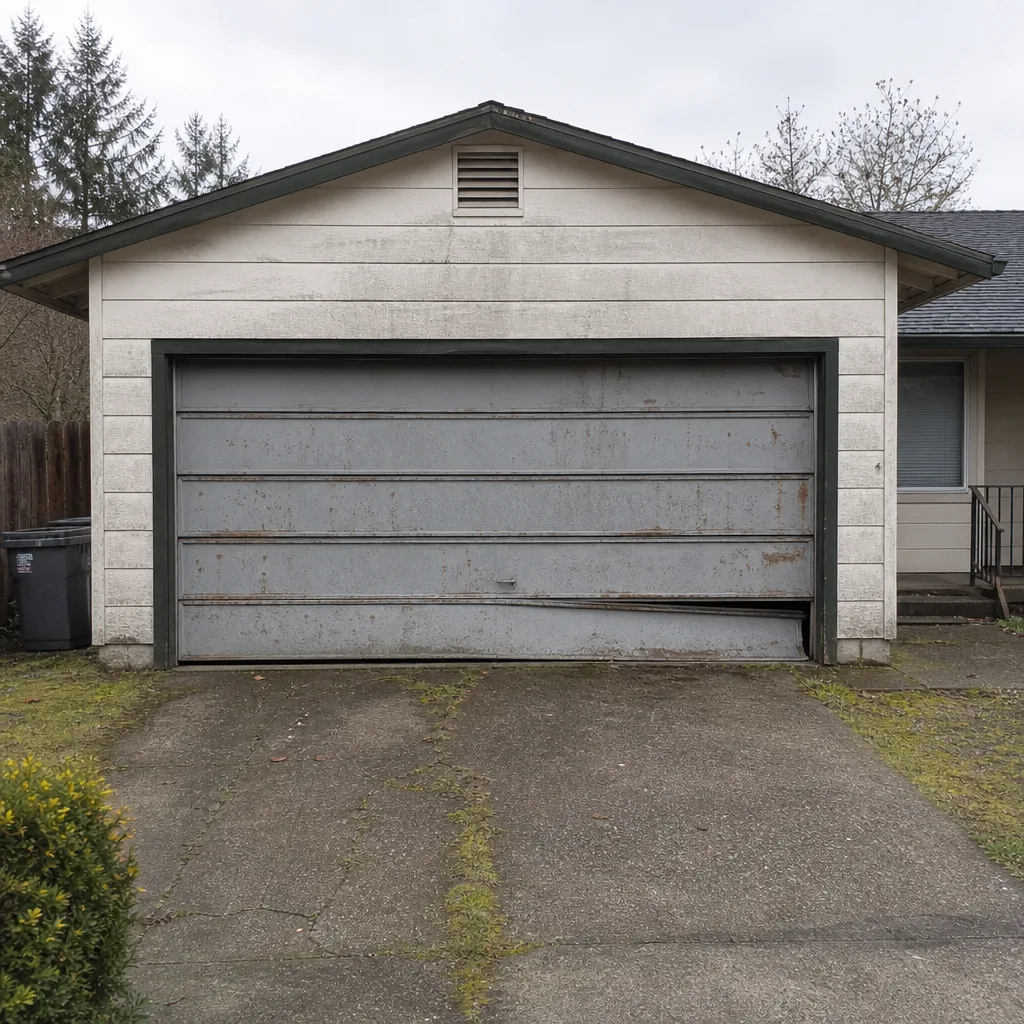 Before
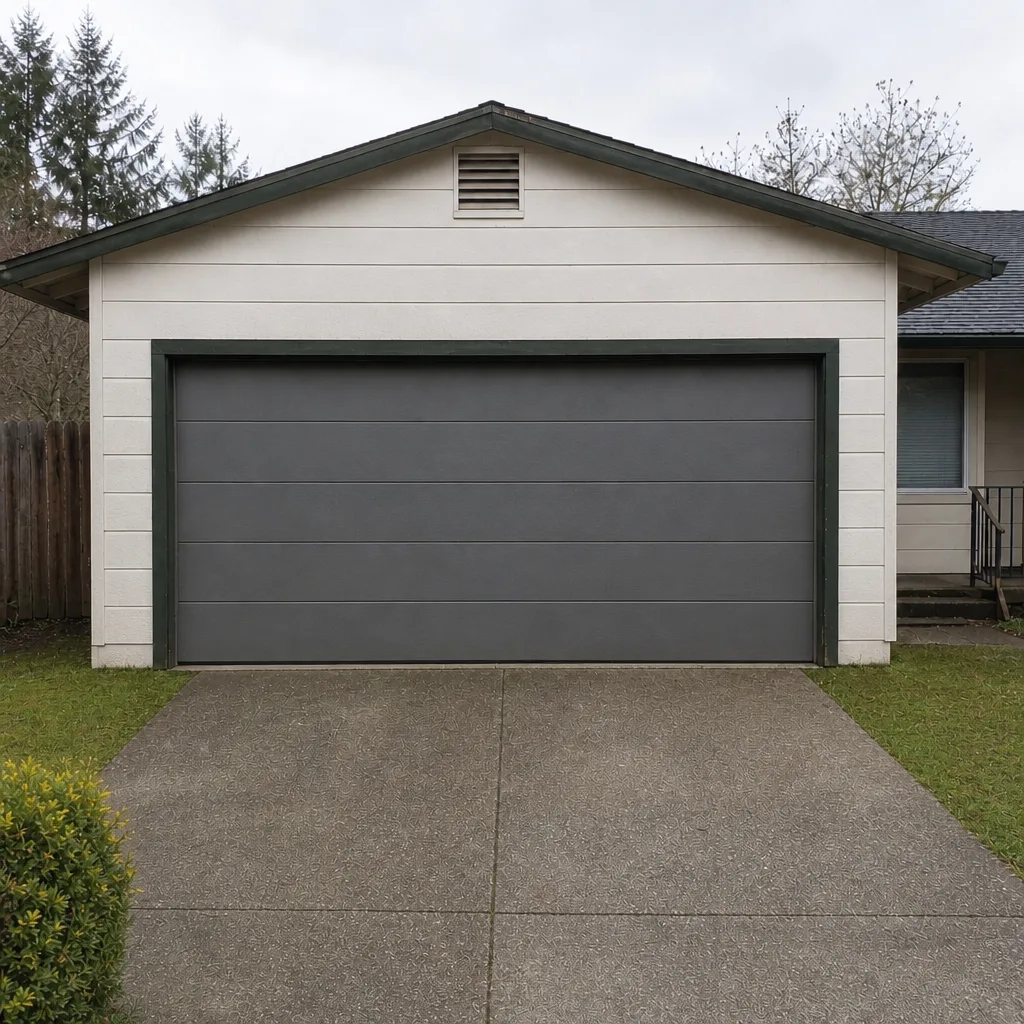 After
When to Call a Professional
Call a technician when the door drifts or drops during the balance test, when a spring shows fresh gaps or a stretched look, when a cable is frayed, when the door reverses on its own, when the track is bent, when the opener makes a new grind or squeal after a lubrication pass, or when the manual release won’t re-engage cleanly. Also call after any impact – a car tap, a stray bicycle, a wind gust strong enough to buckle a panel – because a door that looks fine can be off-track by a fraction of an inch and slowly chewing through rollers.
Federal Way Garage Door Repair Co offers free estimates in Federal Way. Call (855) 337-0888. We answer 24/7. Fast dispatch from 7am to 7pm, Sunday through Friday. Our technicians have up to 9 years of experience and work on all eight major brands, so whether your door is a Clopay steel panel, a Wayne Dalton wood-look door, an Amarr carriage house style, or an older Craftsman setup, the technician arrives already familiar with it. When the door needs something beyond repair, we quote a full install from the same visit – springs, openers, panels, full installs, one call covers it.
Frequently Asked Questions
Do the owner-safe tasks once a month, and book a technician inspection once a year, ideally in November or March when Federal Way’s wet season changes how the door behaves. Those two seasonal checks matter more here than in drier climates because condensation and humidity affect hinges, rollers, and seals. If anything on the door changes – new noise, new drift, new gap – don’t wait for the calendar check. Call (855) 337-0888 for a free estimate.
No. A torsion or extension spring holds 150 to 200 lbs of stored force, and adjusting it safely requires winding bars, counter-torque training, and the ability to know when the spring has failed and must be replaced. Homeowners who try risk serious injury. Spring adjustment is work for a trained technician. Call (855) 337-0888 to schedule a spring check.
Use a PTFE-based lubricant or white lithium spray on hinges and roller stems, and silicone spray on plastic components. Avoid heavy grease, which attracts grit and turns sticky in a wet climate, and avoid solvent-based products on factory finishes like Clopay or Amarr painted steel. Two or three drops on the torsion bar bearings is all they need. A technician can demonstrate the right amount during an inspection. Call (855) 337-0888 to book one.
Typical estimates run $180 – $340 for a single torsion spring. Matched pairs are almost always replaced together, so a pair costs about twice the single-spring range. These are estimates; the written quote after the technician looks at the door sets the final price, and it doesn’t change once work starts. Call (855) 337-0888 for an exact quote; estimates are free.
A passing balance test is a door that stays put (or drifts only a few inches) when lifted to waist height by hand and released. It should not drop on its own and should not shoot upward. Release the opener first, and don’t try to correct a failing result by hand; a door that fails the balance test needs a technician to check the spring tension. Call (855) 337-0888 to schedule that check.
Yes, for repair calls – same-day service is part of what we do. We answer 24/7. Fast dispatch from 7am to 7pm, Sunday through Friday. Installation and new-door work is different: that work is measured, ordered, and scheduled, and you’ll get a written estimate after the measure. Call (855) 337-0888 for either.
The Bottom Line
A garage door maintenance checklist is only useful if it draws a line between what a homeowner can safely do and what needs a trained technician. Lubrication, sensor wiping, weatherstripping inspection, hardware tightening, the balance test, and honest record-keeping you can do yourself. Springs, cables, opener force tuning, and track realignment belong to a technician. In Federal Way, run the Tier 1 tasks monthly and book the full inspection in November or March, when the wet season changes how the hardware behaves. Document what you see so trends get caught before they become emergencies. Whether you’re in Twin Lakes, Lakota, or anywhere else in Federal Way, our team at Federal Way Garage Door Repair Co handles the work that belongs on the other side of that line – a specialist you can call for spring repair, opener repair, panel work, or a full replacement when repairs stop making sense.
Call (855) 337-0888 for a free estimate. We answer 24/7. Fast dispatch from 7am to 7pm, Sunday through Friday.
Written by the team at Federal Way Garage Door Repair Co.