
Last updated November 23, 2026
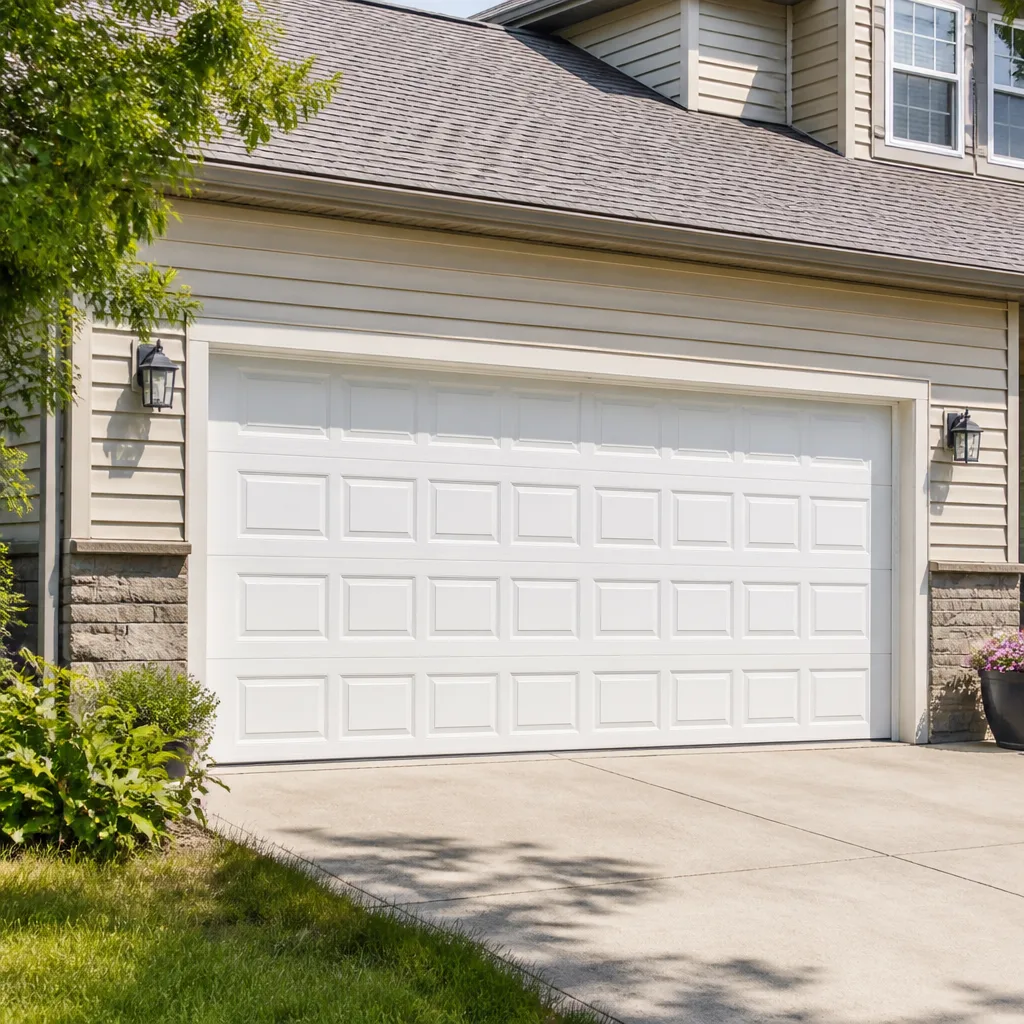 Raised-panel steel
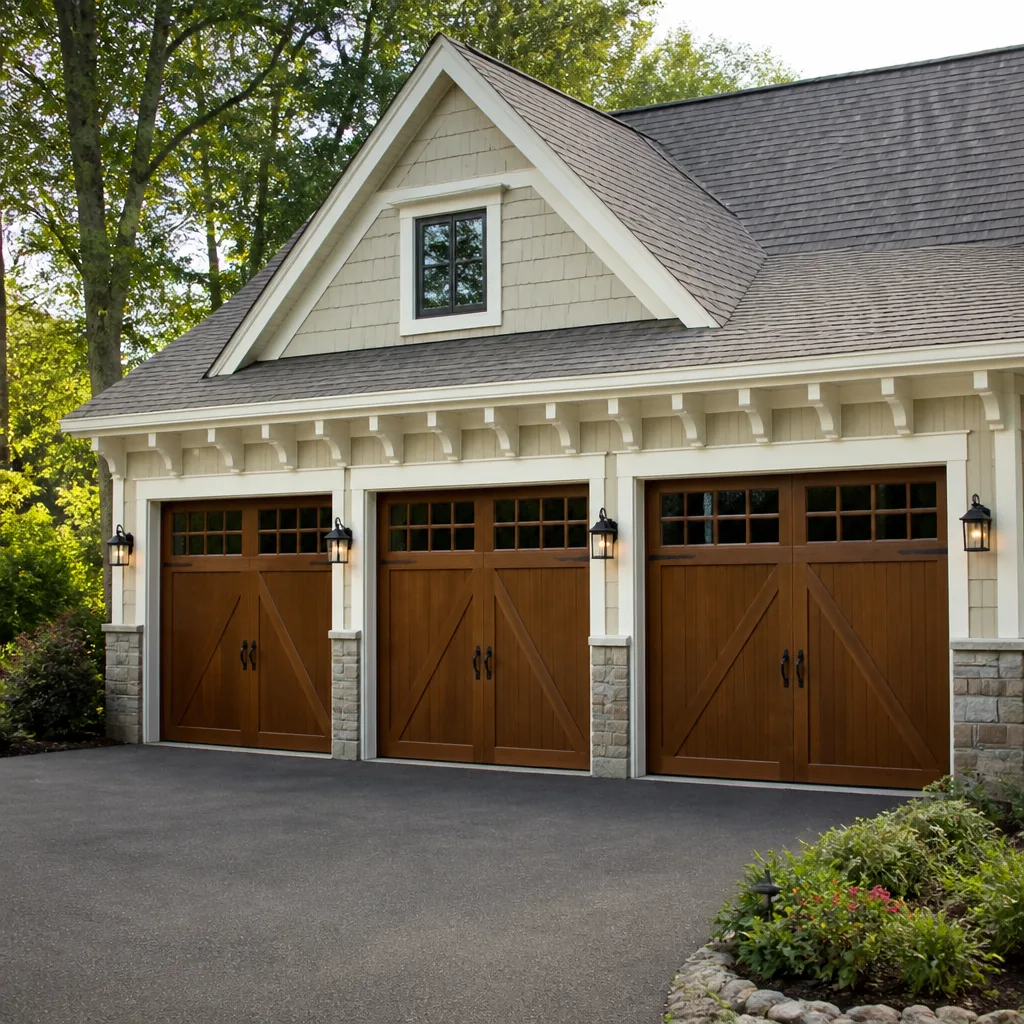 Carriage house
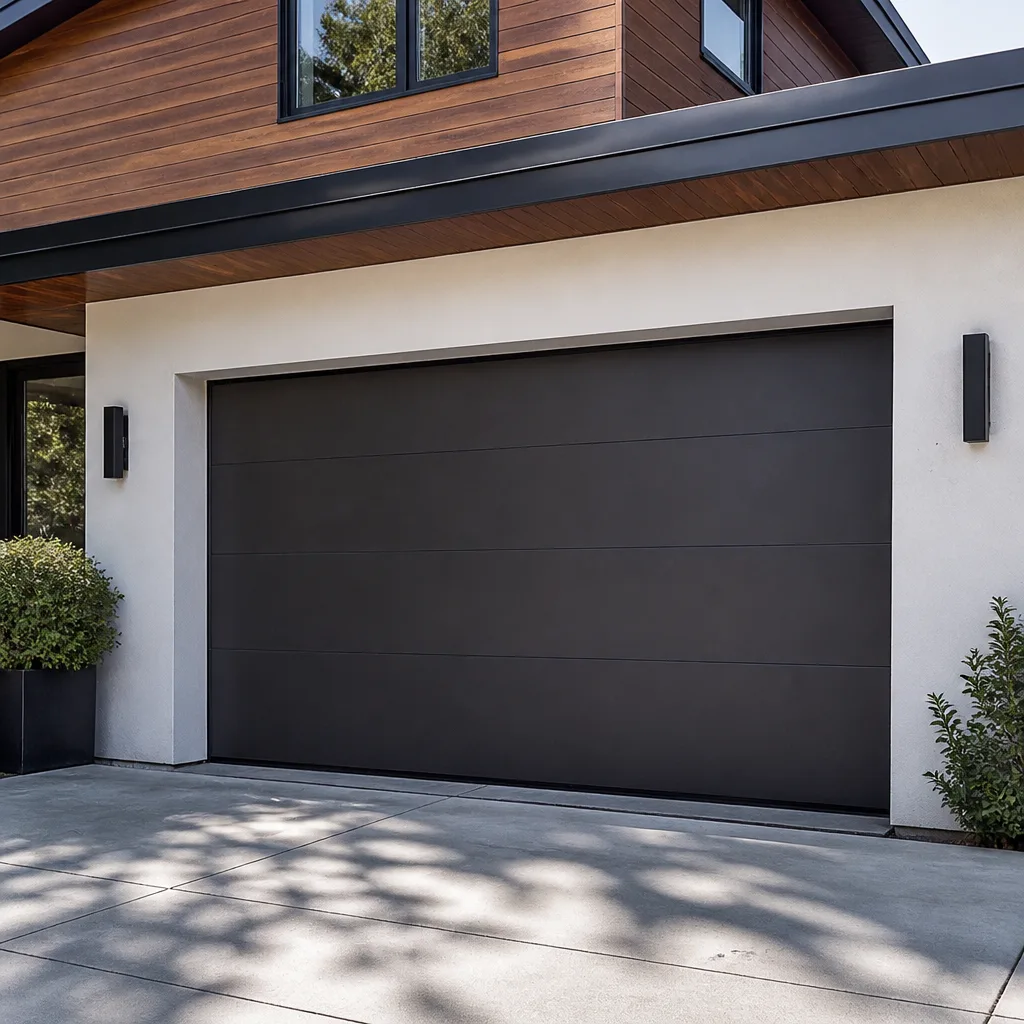 Modern flush
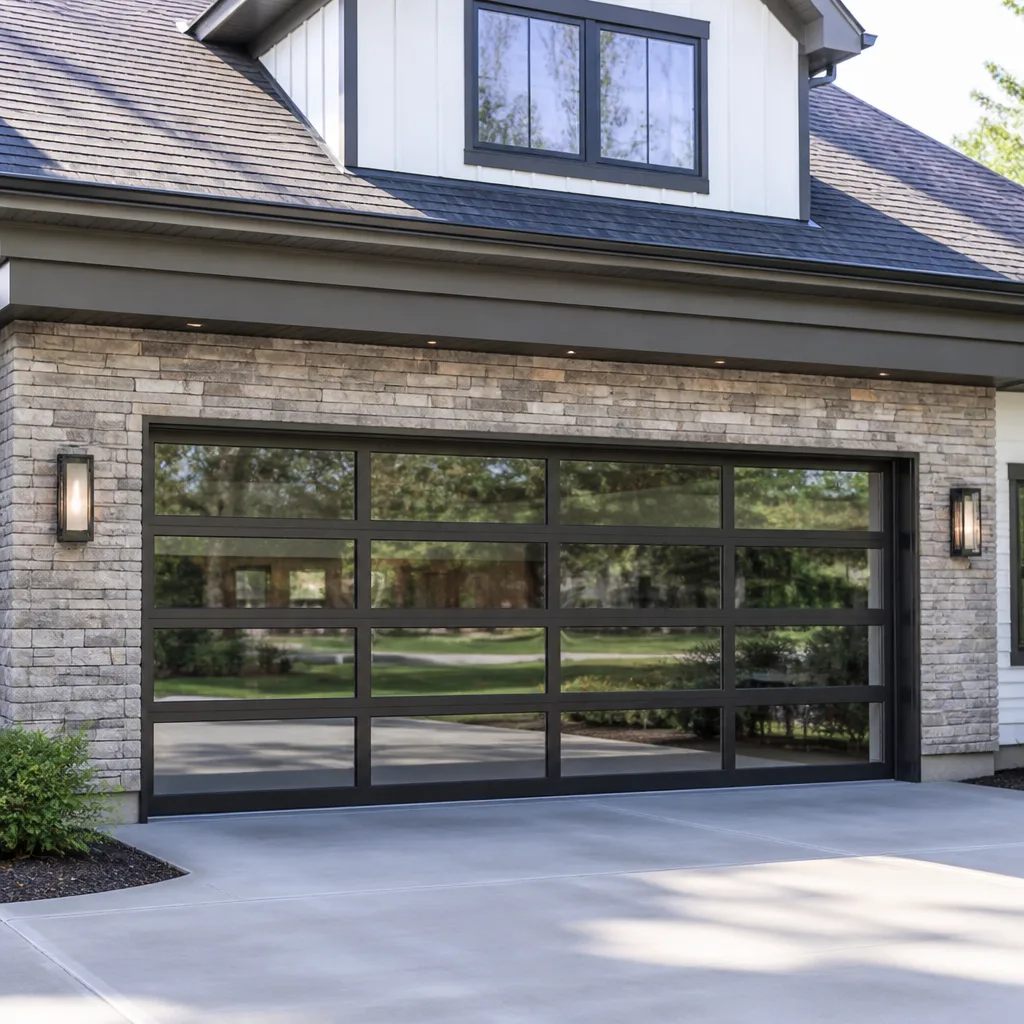 Full-view glass
 LiftMaster openers
 Chamberlain openers
Full 25-point door and opener safety check with every visit - springs, cables, rollers, tracks, and your LiftMaster or Chamberlain opener included
You get a price before we start. It does not change when the pro arrives.
Get your free estimateGarage Door Cost Breakdown: The Federal Way Homeowner’s Reference for 2026
The national average cost for a garage door spring replacement is often quoted as $150 to $350. That range is wide enough to be nearly useless when you’re staring at a quote in your hand, trying to figure out whether the number is fair or padded. National averages blend Manhattan co-op labor with rural Mississippi labor and everything between. They don’t tell you what a Federal Way homeowner should expect to pay for a torsion spring, a set of nylon rollers, or a full door replacement in 2026. This guide does. We break down Federal Way-specific labor rates, parts costs by component, the repair-versus-replace decision, and how to read a quote closely enough to tell quality parts from the minimum. If you want an exact number for your door, call (855) 337-0888. Estimates are free.
Quick Answer
A typical garage door repair in Federal Way in 2026 runs roughly $180 to $700 depending on the component. A single torsion spring replacement is usually $180 to $340, while a full door replacement with a new opener commonly lands between $2,200 and $6,500 depending on door size, material, and insulation. Labor in Federal Way tends to sit about 10 to 20 percent below Seattle proper rates and roughly level with or slightly above Tacoma. The written estimate you receive before work starts is the price you pay.
Styles & brands we work with
- Raised-panel steel
- Carriage house
- Modern flush
- Full-view glass
- LiftMaster openers
- Chamberlain openers
Table of Contents
- What Does Garage Door Labor Cost in Federal Way?
- Parts Costs by Component in 2026
- Repair or Replace? How to Decide
- What Drives Price Variation in Federal Way
- How to Tell Quality Parts From Spec-Minimum Parts
- Opener Repair and Replacement Costs
- New Door Installation Costs
- How to Read a Garage Door Quote
What Does Garage Door Labor Cost in Federal Way?
Garage door labor in Federal Way typically runs $95 to $150 per hour for a trained technician in 2026, and most repairs are quoted as a flat job price rather than by the hour. That flat pricing is a good thing for homeowners: you know the number before the work starts. But the underlying labor rate is what drives the quote, so it’s worth understanding what “fair” looks like in this market.
Federal Way sits between two labor markets that pull in opposite directions. Seattle proper is expensive, driven by overhead, commute times, and the density of older homes with older doors. Tacoma is cheaper, with lower overhead and more competition at the low end. Federal Way tends to land in the middle, sometimes closer to Tacoma levels for residential work. What usually pushes a Federal Way quote to the high end of the range is access, not labor skill. Steep driveways in neighborhoods off Dash Point Road, tight side-yard access in Twin Lakes subdivisions, and doors on garages that sit below grade all add time to a job.
Here’s what a fair hourly rate context looks like across the three markets:
- Federal Way: $95 to $150 per hour, flat-rate quoted per job
- Seattle: $110 to $175 per hour, higher overhead and travel
- Tacoma: $85 to $135 per hour, more low-end competition
Labor isn’t the bulk of most quotes. Parts are. That’s where the next section matters. If you want to skip ahead and just get a number for your door, our garage door repair team writes a free estimate before anything is touched.
Parts Costs by Component in 2026
Parts pricing is where national guides fail Federal Way homeowners most often. A spring is not a spring. A roller is not a roller. Here’s what each component actually costs in this market, quoted as installed prices with labor included, which is how most reputable shops present them.
- Torsion spring (single): $180 to $340 installed. Matched pairs are almost always replaced together and typically run about twice a single spring, or $340 to $620 installed.
- Extension spring (single): $150 to $280 installed.
- Lift cables (per side): $60 to $140 installed, usually replaced in pairs.
- Nylon rollers (set of ten to twelve): $120 to $240 installed.
- Steel rollers (set): $90 to $180 installed.
- Bottom bracket (per side): $90 to $180 installed.
- Single panel replacement: $180 to $450 depending on door style and whether the panel is still in production.
- Weather seal / bottom seal: $95 to $220 installed.
- Opener replacement (belt drive, installed): $450 to $850.
- Opener replacement (chain drive, installed): $380 to $700.
Brand availability shifts these numbers. Doors built on Amarr and Wayne Dalton platforms tend to have panels and hardware available quickly in the Puget Sound region. Older Craftsman and Raynor doors sometimes run higher or take longer if the specific panel profile is out of production. That scarcity is real and it’s one of the reasons we track brand-specific parts availability closely. Our garage door spring repair page covers springs in more depth, including why we replace them in pairs.
Repair or Replace? How to Decide
The repair-versus-replace call is the single most expensive decision in this guide, and it’s the one homeowners get wrong most often. The quick rule: if the door is under 15 years old, structurally sound, and the failure is a single component, repair it. If the door is over 20 years old, has repeated failures, or shows panel deformation or sagging, replacement often costs less over a five-year window than a chain of repairs.
Here’s a decision framework we use:
- Assess the door’s age and material. Steel doors in good shape last well past 20 years. Wood doors start needing real attention around 15.
- Count the failures in the last two years. More than two repairs on the same door usually means it’s entering its final stretch.
- Check the panels for deformation, rust-through, or cracks. Cosmetic issues you can live with. Structural ones you can’t.
- Weigh part availability. If a replacement panel isn’t in production, a repair today often buys you a year at most.
- Compare the repair total against a replacement range. A $400 repair on a 20-year-old door may not be worth it against a $2,400 replacement.
- Consider the opener separately. A working door with a failing opener is an opener job, not a door job.
For a full price range on the replacement side, see our guide to garage door installation. Replacement work is measured, ordered, and scheduled, so a free measure and a written price is the honest first step.
What Drives Price Variation in Federal Way
Two quotes for the same job can differ by 40 percent or more in this market. That gap is rarely about skill. It’s about four specific factors that show up over and over in Federal Way.
Same-day availability. A door that won’t close is a security problem, and it changes how the job is scheduled. Emergency response and same-day repair exist for real reasons, but the honest framing is this: the price is set per job by the written estimate, not by when the technician arrives. If your door has failed and you need it working today, call (855) 337-0888. We answer 24/7. Fast dispatch from 7am to 7pm, Sunday through Friday.
Brand parts scarcity. Doors built on Lifton-era hardware, discontinued Craftsman profiles, or older Raynor lines can require sourcing outside the region. That adds days, not dollars, in most cases, but it does change the quote.
Access difficulty. Federal Way has a lot of lots where the garage sits at the end of a steep drop, against a retaining wall, or with a low clearance overhead. A torsion spring swap on a door with eight inches of headroom takes longer than on one with a standard open ceiling.
Door size and weight. Double-car doors carry heavier springs and stronger openers. A 16-foot insulated door is not the same job as a basic 8-foot single door.
Understanding these factors is what lets you read a quote and know whether it’s calibrated to your actual job or padded for a problem that doesn’t exist.
How to Tell Quality Parts From Spec-Minimum Parts
This is the section most cost guides skip, and it’s the one that saves you the most money over time. A literal spec-minimum spring will pass inspection and fail inside four or five years. A properly rated torsion spring of the same diameter can last well over a decade under normal use. The price difference is small. The replacement-cycle difference is not.
Here’s what to look for in a quote or on the parts themselves:
- Spring cycle rating. Ask how many cycles the spring is rated for. Standard minimum is typically 10,000 cycles. Higher-rated springs last longer and cost maybe $30 to $80 more. That’s the right trade every time.
- Oil-tempered vs. galvanized springs. Oil-tempered is the standard for residential torsion springs. Galvanized is for high-humidity applications, which Federal Way generally isn’t, but it can make sense for a garage with a persistent moisture issue.
- Nylon rollers vs. steel. Nylon is quieter and lasts longer. If a quote shows steel rollers without you asking for them, ask why.
- Bearing plates vs. bearings only. A roller bearing seated in a fresh plate is quieter than a bearing riding in a worn or thin plate.
- Cable thickness. Cables are rated by diameter and breaking strength. A thinner cable on a heavier door is a shortcut.
If you’re not sure whether your quote reflects quality parts, ask the technician directly. On a Federal Way job, we’ll tell you what we’re installing and why. Our garage door opener repair page covers opener-specific parts in the same way.
Opener Repair and Replacement Costs
Opener work has its own cost curve, and it’s worth separating from the door. Most opener problems are repairable for $150 to $350. Replacing the whole unit lands $380 to $850 installed, depending on drive type and smart features. Here’s the breakdown:
- Logic board replacement: $180 to $340 installed
- Safety sensor replacement: $120 to $220 installed
- Gear and sprocket kit: $140 to $280 installed
- Capacitor replacement: $110 to $200 installed
- Belt drive opener, installed: $450 to $850
- Chain drive opener, installed: $380 to $700
- Screw drive opener, installed: $450 to $800
Brand fluency matters most in this category. LiftMaster and Chamberlain logic boards fail in very specific ways. Genie openers from the 1990s have their own quirks. Craftsman units share parts with Chamberlain. We work on all of those brands, which means the diagnosis is usually faster and the fix isn’t a guess. If your opener is failing, call (855) 337-0888 for a free estimate. We answer 24/7.
New Door Installation Costs
A full door replacement in Federal Way in 2026 typically runs $1,800 to $5,500 for the door alone installed, and $2,200 to $6,500 when a new opener is included. That range is large because door replacement is genuinely a range of jobs: a basic 8-foot steel single door is a different project from a 16-foot insulated double door with a custom color and a new smart opener.
Here’s a realistic breakdown by door type:
- Basic uninsulated single steel door (8×7): $1,800 to $2,600 installed
- Insulated single steel door (8×7): $2,200 to $3,400 installed
- Insulated double steel door (16×7): $3,200 to $4,800 installed
- Insulated double door with premium color and hardware: $4,000 to $5,500 installed
- Wood or carriage-style door: $4,500 to $8,000+ installed
- Opener added at install: $380 to $850 additional
Installation is measured, ordered, and scheduled. That means the process starts with a free measure and a written price, not a same-day arrival. New doors ship in 10 to 20 business days on most common profiles, and longer if the specific model or color is backordered. When you’re ready to talk about a replacement, our team at Federal Way Garage Door Repair Co handles the full arc from measure through installation. Garage doors are all we do, so a repair that reveals a door that needs replacing doesn’t send you to a second company.
How to Read a Garage Door Quote
A quote that looks clean isn’t necessarily clear. Here’s how we’d suggest reading any estimate you receive, from us or anyone else.
- Check that parts are itemized. A quote that says “spring repair – $280” is fine. A quote that says “repair – $280” is not. You want parts and labor separated.
- Check for cycle ratings on springs. If the rating isn’t listed, ask. A quote that won’t state a cycle rating is hiding something.
- Confirm the brand of any replacement part. Aftermarket is sometimes fine, sometimes not. You should know either way.
- Look for a line confirming the price is set before work starts. Any reputable shop will put this in writing.
- Check what’s excluded. If removal and disposal of the old door isn’t listed on a replacement quote, ask whether it’s included.
- Ask what the estimate does and doesn’t cover. If additional problems are found once the door is open, you should know how that gets handled before the technician starts.
The bottom line on quote-reading: the written estimate is the price. Anything else is a conversation to have before work begins.
Common Mistakes to Avoid
- Assuming the national average applies here. A $150 spring replacement in a low-cost market is not a $150 spring replacement in Federal Way. Local labor and parts pricing differ enough that national ranges mislead.
- Accepting the cheapest quote without reading it. The lowest price often reflects spec-minimum parts that fail sooner. You’ll pay twice if the spring is rated for 10,000 cycles instead of 25,000.
- Not asking about spring cycle ratings. This is the single clearest quality signal on any spring quote. If it isn’t stated, ask.
- Assuming same-day work is always available on installation. New door replacement is measured and scheduled, not same-day. A quote that promises same-day on a full replacement is worth questioning.
- Ignoring the opener when the door needs work. The opener and door age together. If your door is 18 years old and the opener is original, factor both into the replacement decision.
- Trusting a repair quote that doesn’t explain access or site conditions. Federal Way has plenty of garages with tight clearance, low headroom, or steep driveways. A quote that ignores those details is a quote that will grow once the technician arrives.
- Choosing a company without brand fluency. If the company doesn’t work on your door or opener brand, the diagnosis takes longer and the fix may be a guess. Ask.
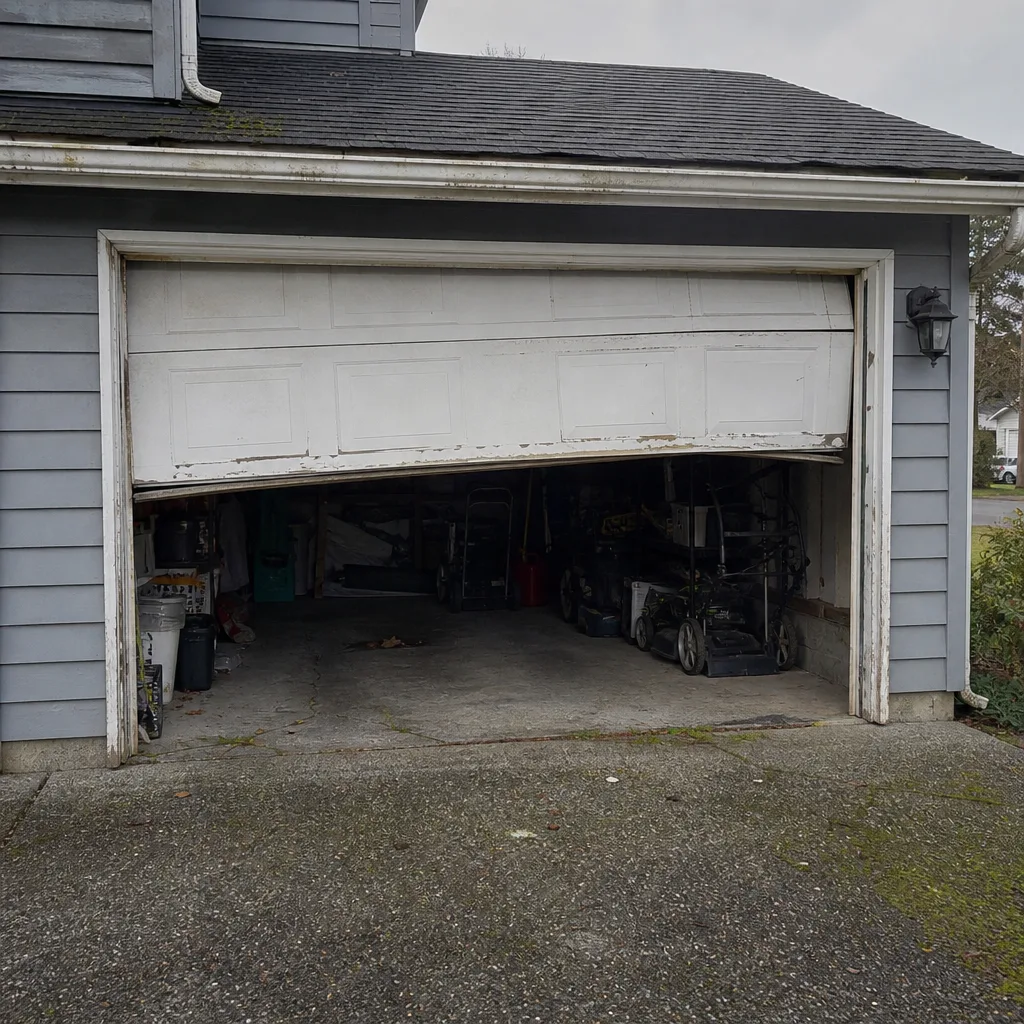
See the difference
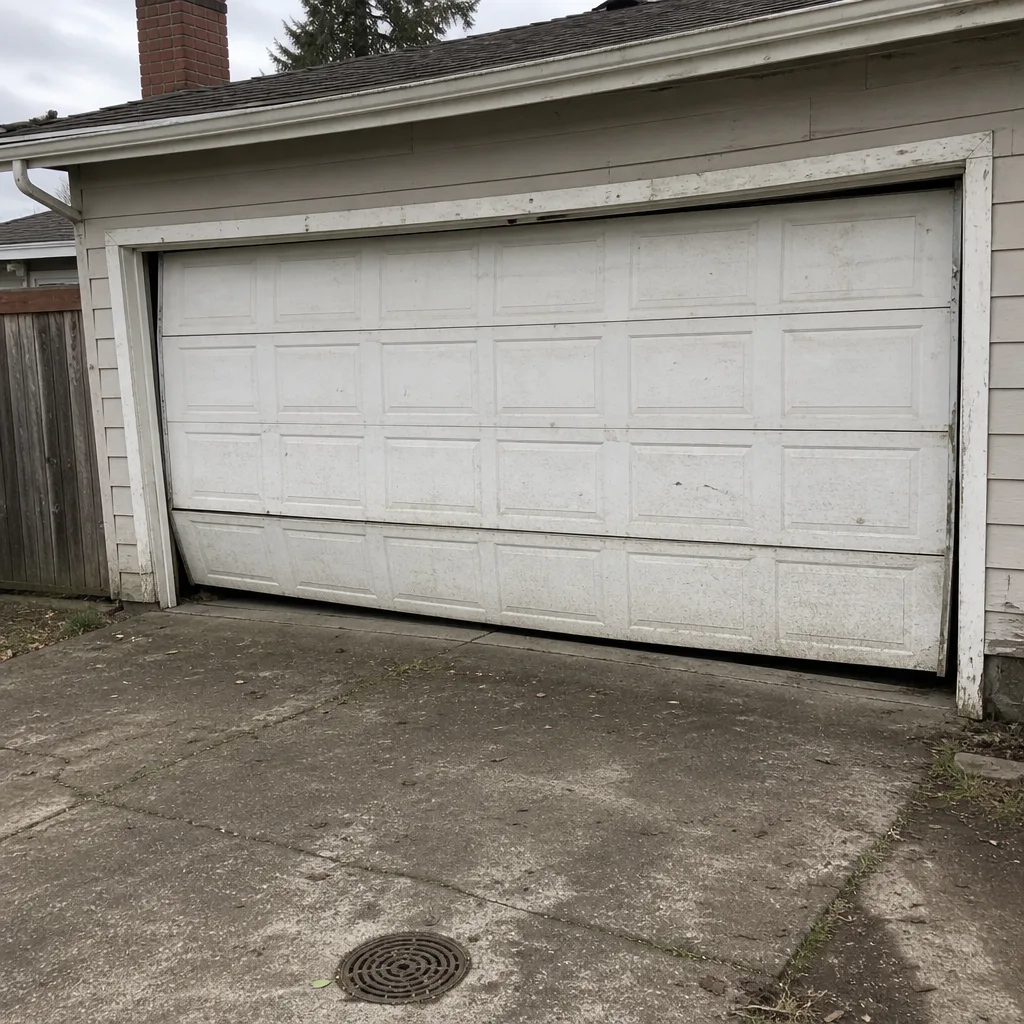 Before
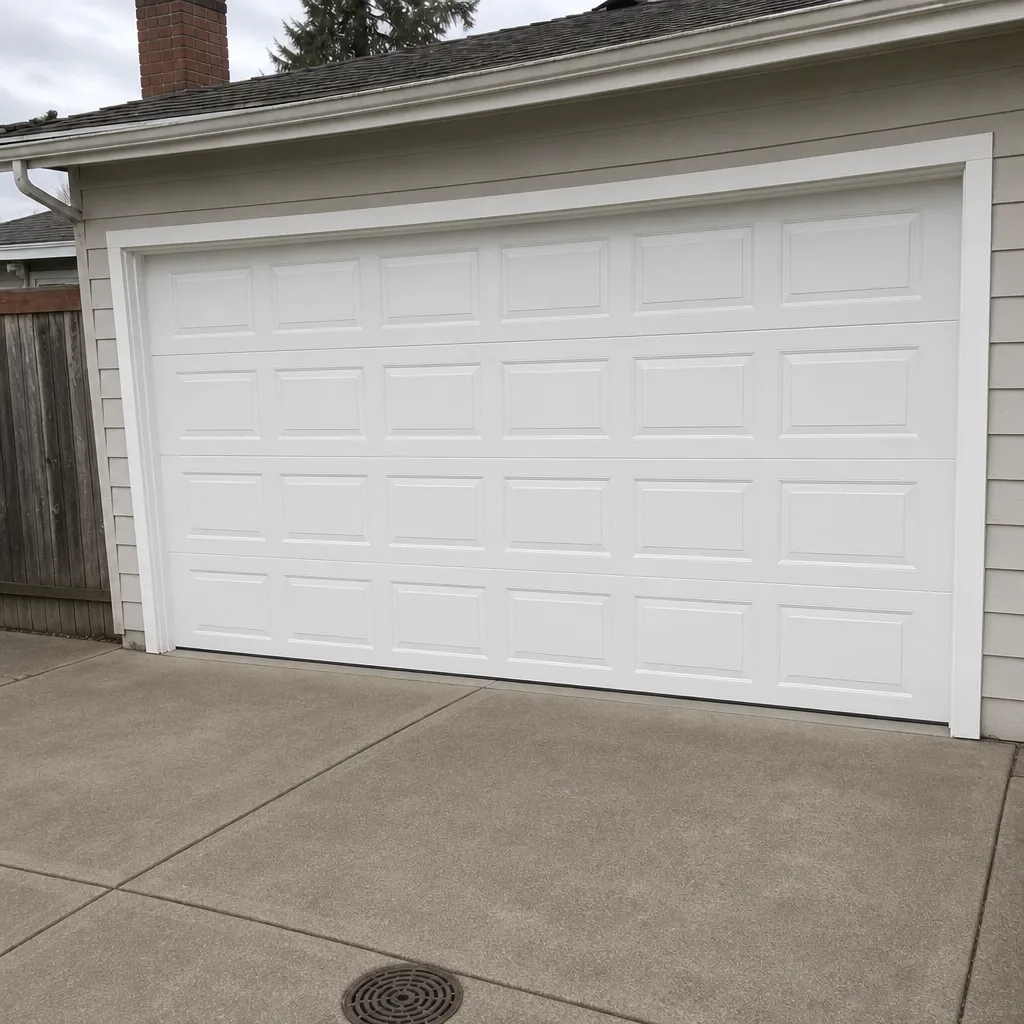 After
 Before
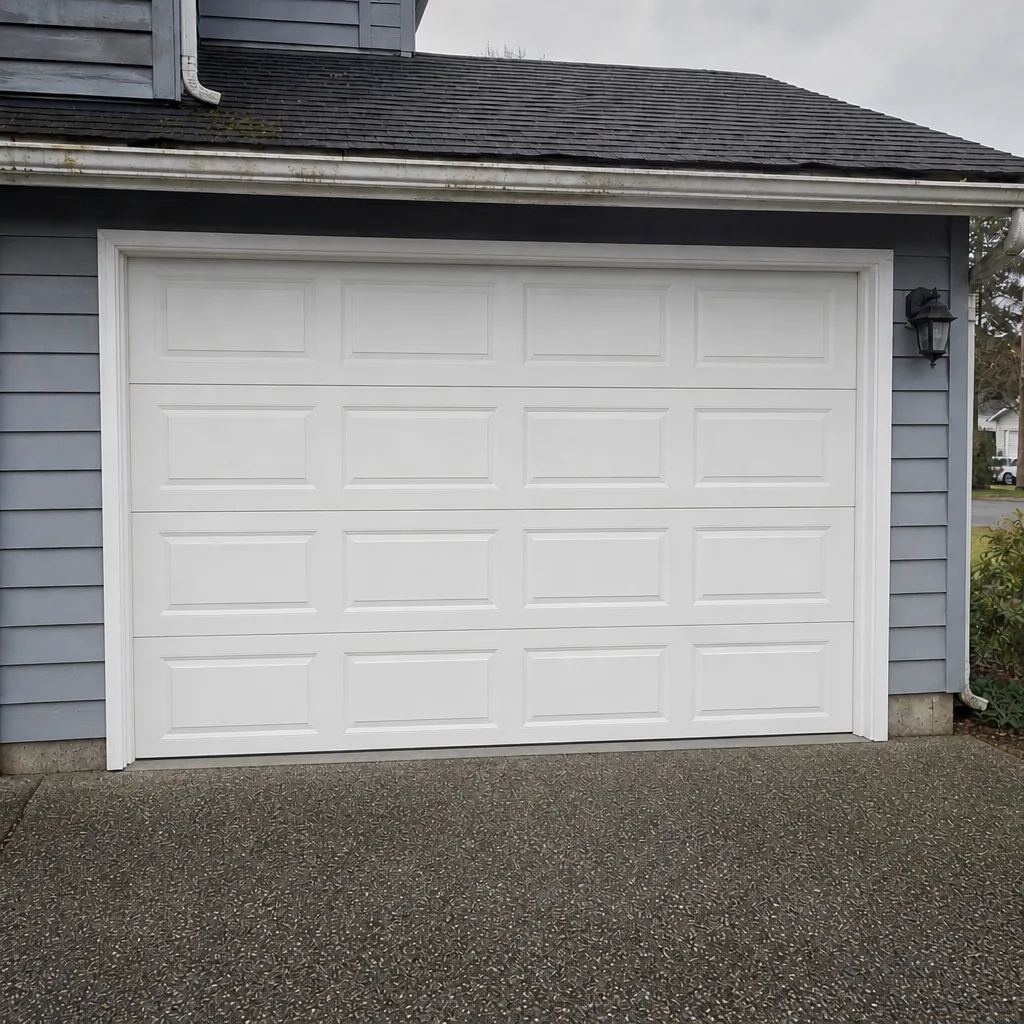 After
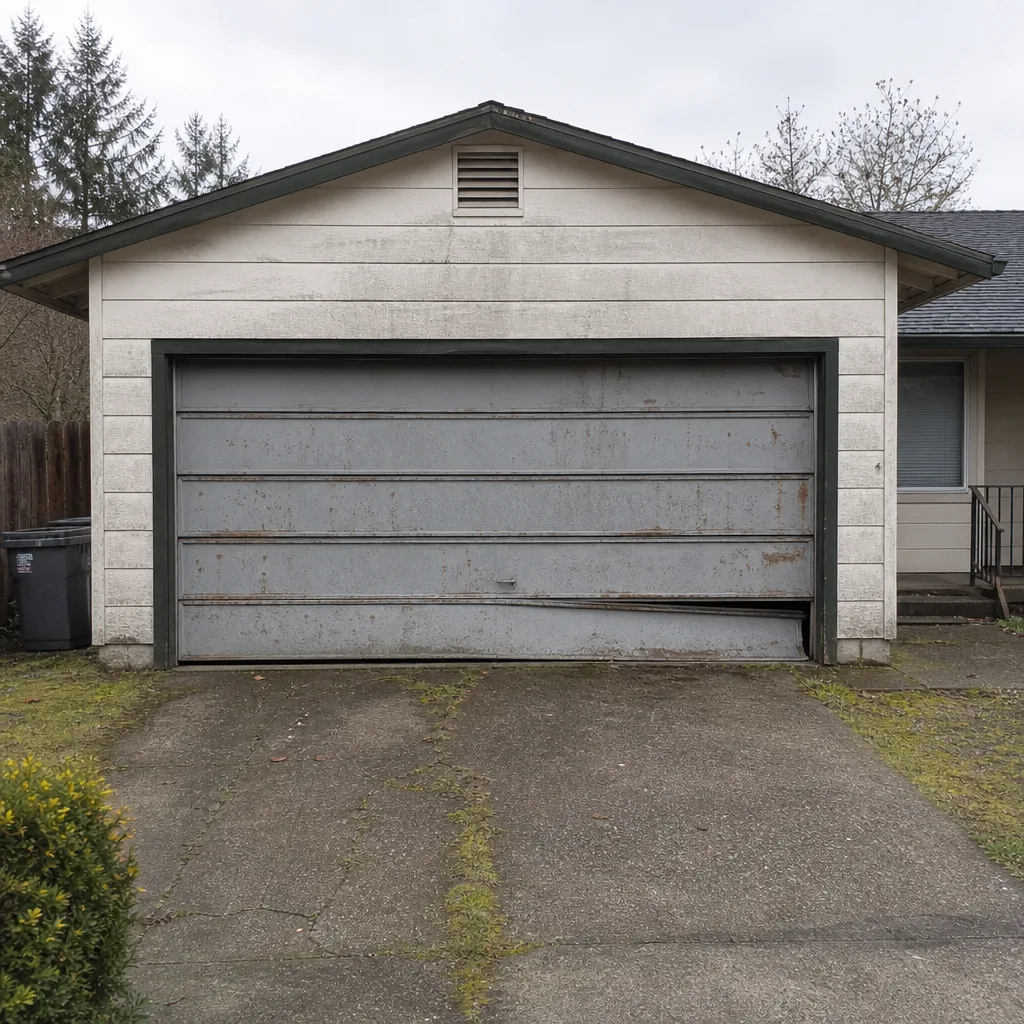 Before
 After
When to Call a Professional
Some garage door work is safe to handle yourself. A visual inspection, a roller swap on a door with no tension on it, a sensor alignment check – those are things a careful homeowner can do. But torsion springs, lift cables, and anything that involves releasing tension or working near the bottom bracket are dangerous, period. Springs are under extreme tension and the wrong move can cause serious injury. The same goes for opener wiring tied to the home’s electrical system. Both belong in the hands of a trained technician.
If your door won’t open or close, has a snapped spring, a frayed cable, a bent panel, or an opener that’s failing, it’s time to bring someone in. Federal Way Garage Door Repair Co offers free estimates in Federal Way. Call (855) 337-0888. We answer 24/7. Fast dispatch from 7am to 7pm, Sunday through Friday. Our technicians have up to 9 years of experience and work on all eight major brands. We work on the brand you already have. When your door won’t move, we will.
Frequently Asked Questions
Most garage door repairs in Federal Way in 2026 cost between $180 and $700 depending on the component. A single torsion spring typically runs $180 to $340, a set of rollers $120 to $240, and a cable replacement $60 to $140 per side. Call (855) 337-0888 for an exact quote. Estimates are free.
Repair is cheaper when the door is under 15 years old, structurally sound, and the failure is a single component. Replacement becomes cheaper over a five-year window when the door is over 20 years old, has repeated failures, or shows panel deformation. Compare a $400 repair against a $2,400 replacement on a 20-year-old door and the replacement is usually the right call.
Federal Way labor sits between the two markets: roughly 10 to 20 percent below Seattle rates and slightly above Tacoma. Access difficulty on some Federal Way lots, plus brand parts availability, are the biggest local price drivers. The written estimate reflects your specific job.
No. The written estimate you receive before work starts is the price you pay. If additional problems are discovered once the door is open, that gets discussed with you before any extra work begins, never after the invoice is written. Call (855) 337-0888 for a free estimate.
The local professional we connect you with is licensed and insured as their state requires. Our technicians have up to 9 years of experience and are trained on LiftMaster, Chamberlain, Genie, Clopay, Amarr, Wayne Dalton, Craftsman, and Raynor. Call (855) 337-0888 to talk through your door.
Same-day service is often possible for a door that has failed. Call (855) 337-0888 and we’ll book you in. We answer 24/7. Fast dispatch from 7am to 7pm, Sunday through Friday. Installation and replacement work is measured and scheduled, so those quotes start with a free measure.
The Bottom Line
National average pricing obscures what Federal Way homeowners actually pay. The numbers that matter are local: labor that runs below Seattle and near Tacoma, parts prices that vary meaningfully by brand, and access conditions on Federal Way lots that change a job’s time and cost. A fair quote in 2026 is one that itemizes parts, states spring cycle ratings, and confirms the price before work begins. Repair when the door is sound and the failure is isolated. Replace when age, repeated failures, or part scarcity point the other way. Either way, the written estimate is the price, and a free one is the right way to start. Call (855) 337-0888 to get yours.
Written by the team at Federal Way Garage Door Repair Co.